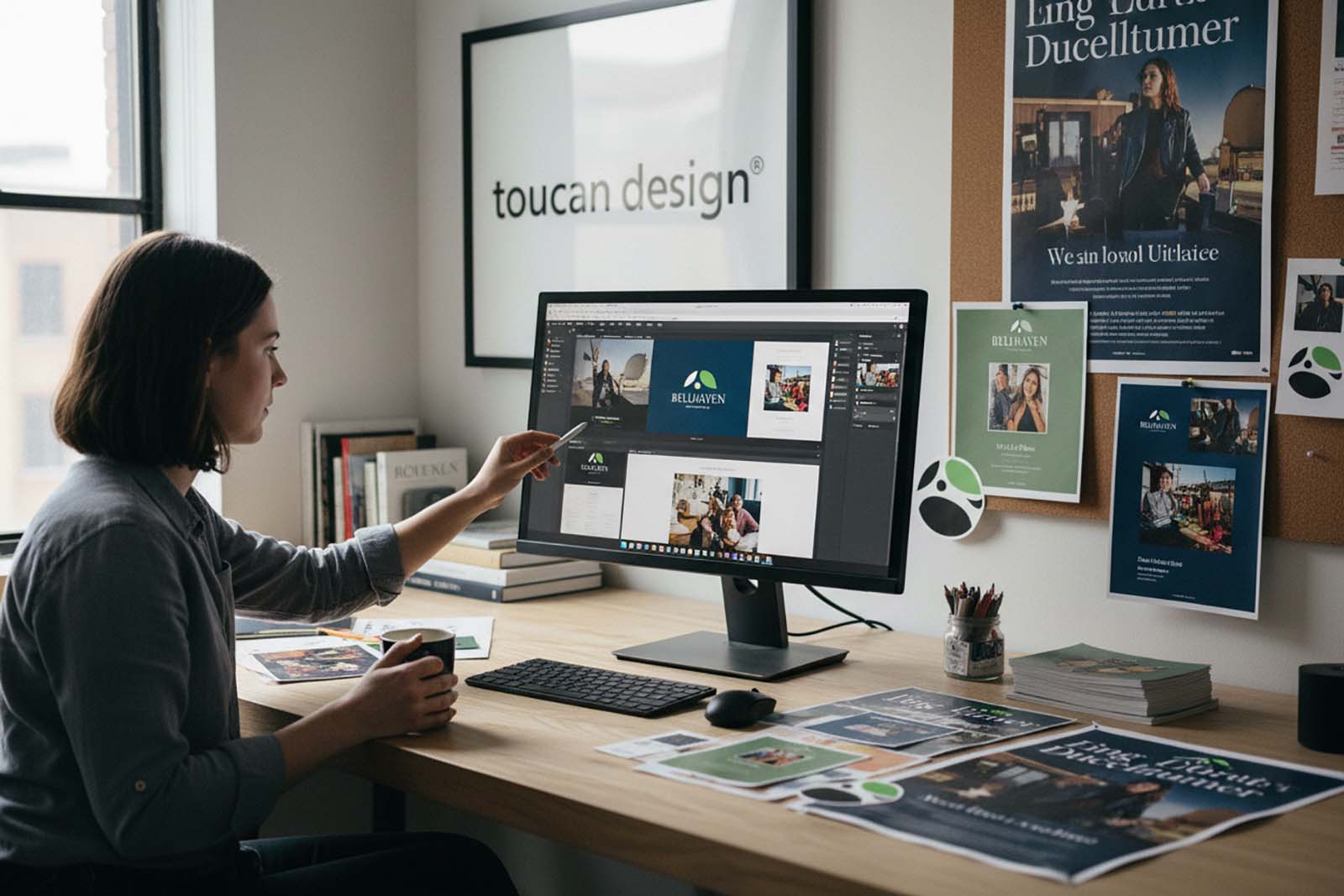
A strong sales conversation can stall for a simple reason: the prospect leaves the meeting with nothing clear, useful, or memorable in hand. That is why the best print materials for sales still matter. They give your team something tangible to support the pitch, reinforce your brand, and help buyers remember what sets you apart after the conversation ends.
Print is not a substitute for a good website, digital proposal, or follow-up email. It works best as part of a larger system. When your printed materials match your brand, support your messaging, and connect to your digital marketing, they make your business look more established and easier to trust.
What makes print sales materials effective
The most effective print pieces do one of three jobs well: they introduce your company clearly, explain a service or offer simply, or help move a buyer to the next step. Problems start when one printed piece tries to do all three at once.
A sales handout should not read like a company history. A brochure should not feel like a dense technical manual. A leave-behind should not require a salesperson standing next to it to make sense of it. Good sales print is focused, easy to scan, and designed around real buying questions.
That means the best print materials for sales are not always the flashiest ones. Often, the pieces that perform best are the ones that organize information clearly, use strong visuals, and respect the reader’s time.
The best print materials for sales by use case
Sales sheets
If most businesses had to choose one printed sales tool, a well-designed sales sheet would be the safest choice. It is concise, flexible, and easy to tailor by audience, industry, or service line.
A good sales sheet gives prospects the essentials fast: who you are, what you offer, who it is for, why it matters, and how to take the next step. It can support an in-person meeting, direct mail campaign, trade show conversation, or follow-up packet. For service-based businesses, it is often more useful than a broad brochure because it stays focused on a specific solution.
This format works especially well for manufacturers, healthcare groups, professional service firms, hospitality brands, and organizations with multiple offerings. Instead of forcing every service into one piece, you can create separate one-sheets for each audience or category.
Brochures
Brochures are still valuable when your sales process requires more context. If a prospect needs to understand multiple services, a broader company story, or a more visual overview, a brochure can do that well.
The trade-off is space. Brochures give you more room, but they also invite clutter. The strongest brochures are structured around buyer priorities, not internal talking points. Clear sections, concise copy, and polished photography or graphics matter more here than trying to fit every detail on the page.
For many organizations, brochures are best used in welcome packets, proposal folders, event kits, or front-desk distribution rather than as the primary sales tool.
Business cards
Business cards are easy to dismiss until you attend a conference, sales visit, networking event, or client meeting where a digital contact exchange never quite happens. A professional card still signals readiness and professionalism.
That said, the best business cards for sales are not overloaded with information. Name, title, phone, email, website, and a clean brand presentation are enough in most cases. Premium stock, readable type, and thoughtful finishing make a bigger impression than novelty shapes or crowded layouts.
Presentation folders
For businesses with a longer or more consultative sales cycle, presentation folders are often worth the investment. They help organize proposals, case studies, sales sheets, pricing pages, and supporting documents into one polished package.
This matters in industries where perception and trust play a major role. Professional services, commercial services, education, healthcare, nonprofits, and institutional organizations often benefit from folders because they turn separate documents into a cohesive presentation.
Folders also support internal sales consistency. When every rep presents information in a structured, branded format, your company appears more organized and credible.
Catalogs and product guides
If your business sells multiple products, configurations, or technical options, a catalog or product guide may be one of the best print materials for sales. Buyers often need a reference they can review after the meeting, especially when several stakeholders are involved.
The key is usability. A catalog should help people compare options, understand categories, and find what fits their needs. Strong hierarchy, product organization, and photography are essential. If buyers cannot quickly locate the right information, the piece becomes expensive shelf weight.
Postcards and direct mail pieces
Not every sales print piece is handed out in person. Postcards and direct mail still have a role when you want to reach prospects consistently, announce a new service, re-engage past customers, or support a targeted campaign.
This format works best with a single message and a clear next action. It is not the place for dense copy. If your business is promoting an event, seasonal service, limited-time offer, or specific audience solution, direct mail can support sales effectively when the design and message are disciplined.
The United States Postal Service offers practical guidance on mailing formats and automation requirements, which is worth reviewing before large print runs or mail campaigns.
How to choose the right print piece for your sales process
The right choice depends less on what looks impressive and more on how your sales process actually works.
If your team has short first meetings, sales sheets and business cards usually make the most sense. If you sell a broad range of services and need to build trust over time, brochures and folders may be more useful. If your buyers compare products across multiple categories, a product guide or catalog can carry more value than a generic brand piece.
It also depends on where sales happen. Trade shows call for compact, scannable materials. On-site consultations may need service sheets or leave-behinds that answer common follow-up questions. Proposal-based selling often benefits from a coordinated package that includes print collateral and digital follow-up.
This is where brand consistency matters. Your printed materials should align with your website, proposal templates, presentations, and overall identity. If a prospect sees one look in print and another online, confidence drops. The same is true when messaging changes from one touchpoint to the next. Strong branding keeps every sales interaction working together.
Design details that affect sales results
Plenty of print pieces fail for reasons that have nothing to do with paper quality. More often, they fail because they are hard to read, poorly organized, or visually disconnected from the brand.
Good print design starts with hierarchy. The reader should know where to look first, what matters most, and what action to take next. Headlines need to be clear. Body copy needs breathing room. Images should support the message, not just fill space.
Accessibility also matters. Readable contrast, legible fonts, and sensible type sizes make materials easier for more people to use. The Web Content Accessibility Guidelines are typically discussed in digital settings, but the same readability principles improve print communications as well.
There is also a practical side to production. A beautiful piece that is too expensive to replenish or too bulky for field reps to carry may not be the right choice. The best print materials for sales balance presentation with day-to-day usability.
Why print works better when it is connected to other marketing
Sales print is strongest when it does not stand alone. A brochure should reflect your brand identity. A sales sheet should support the service messaging on your website. A folder should complement your proposal process. If those pieces are built in isolation, they tend to age quickly and create mixed signals.
That is why many businesses benefit from treating print as part of a broader marketing system rather than a one-off project. A coordinated approach across branding, print collateral, website content, and SEO creates a more consistent buyer experience. Toucan Design often helps clients approach these pieces as connected tools instead of separate tasks, which usually leads to better long-term value and easier updates.
Google’s guidance on helpful, people-first content is aimed at web content, but the principle applies here too: clear, useful communication outperforms filler every time.
Common mistakes to avoid
The most common mistake is trying to say everything. When a print piece includes every service, every feature, every credential, and every audience, it usually becomes less persuasive, not more.
Another issue is designing for internal preferences instead of buyer needs. Teams often want to include details prospects are not ready for yet. Good sales materials meet buyers where they are. They answer the next question, not all possible questions.
Finally, many companies print materials without thinking about updates. Staff changes, service changes, pricing adjustments, and website revisions happen. A smart print strategy plans for that. Some pieces should be evergreen. Others should be easy to revise and reprint without starting over.
The strongest print sales materials are the ones your team actually uses. They feel professional, they support the conversation, and they make the next step easier for the buyer. If a piece cannot do that, it does not matter how polished it looks. The right print material should help your sales process feel clearer, more credible, and more consistent from the first introduction to the final decision.