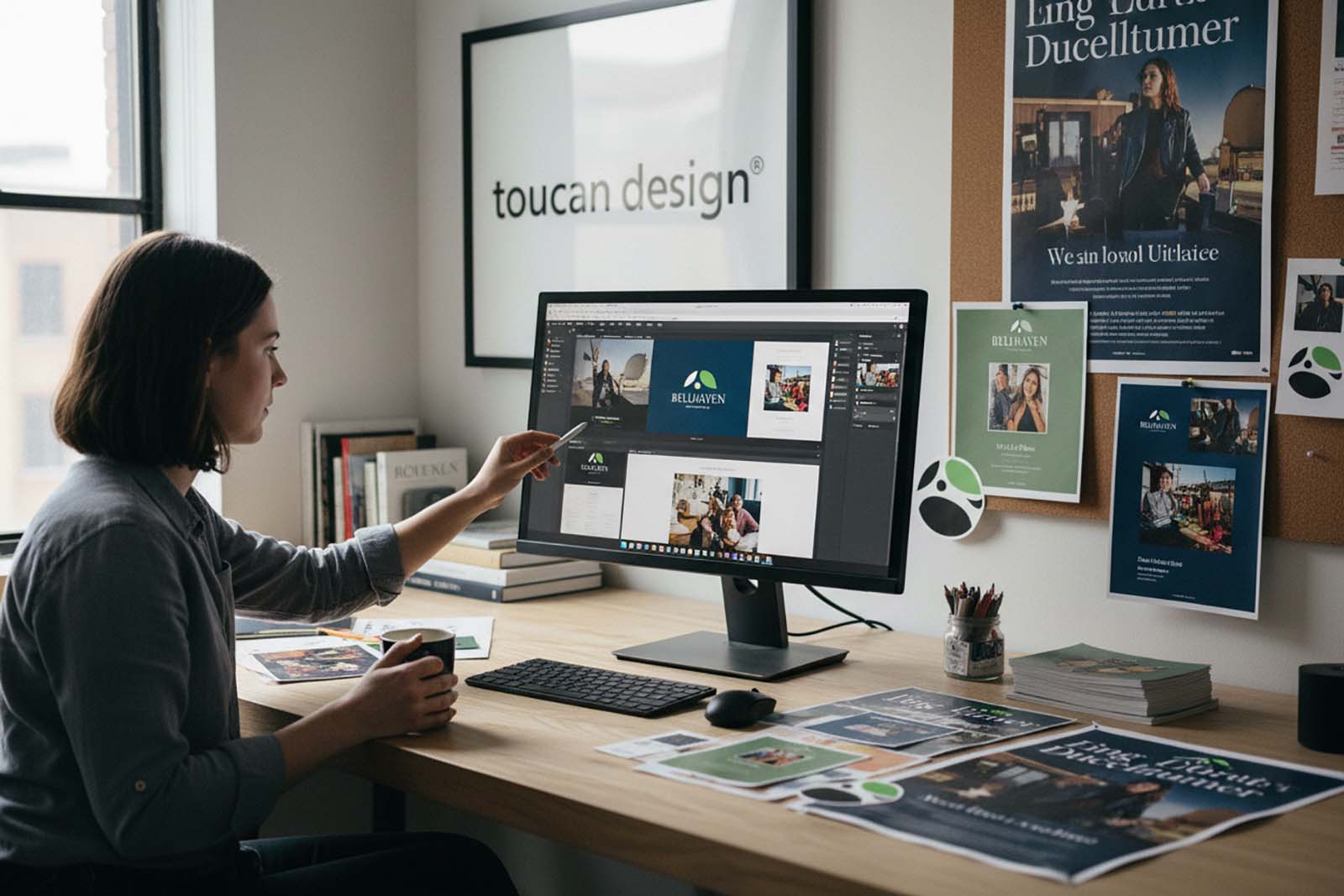
A dated logo usually shows up long before anyone says it out loud. It appears in a proposal that feels less polished than the competition, on a website that no longer reflects the quality of the business, or on signage and printed materials that send mixed signals. Branding and logo design services are often where companies start when they know their image needs to improve, but the real value goes well beyond a new mark.
For most businesses, branding is not about looking trendy. It is about being clear, credible, and consistent wherever customers encounter the company. That might be a website, a brochure, a trade show display, a sales presentation, a social media graphic, or the sign on the front door. When those touchpoints feel disconnected, the brand feels weaker than the business really is.
What branding and logo design services actually include
Many people use the terms branding and logo design interchangeably, but they are not the same thing. A logo is one part of a larger identity system. It matters, but it cannot carry the full burden of how a business is understood.
Branding work usually begins with questions that are more strategic than visual. What does the business need to communicate? Who is it trying to reach? What sets it apart in a crowded market? What impression should customers have after one visit to the website, one call with the office, or one look at a printed piece?
From there, logo design becomes part of a broader visual framework. That can include color palettes, typography, image direction, messaging style, graphic elements, layout standards, and practical usage rules. A strong brand system helps a business look recognizable and professional without having to reinvent every piece of marketing from scratch.
This is where experienced branding work pays off. The goal is not to create something clever for its own sake. The goal is to create a brand that fits the organization, supports its reputation, and works across real business applications.
Why a logo alone is rarely enough
A logo can be well designed and still fail to solve the real problem. If a company has inconsistent messaging, outdated collateral, an underperforming website, and disconnected marketing materials, changing the logo may help visually, but it will not create brand clarity on its own.
That is why branding and logo design services are most effective when they are approached as part of a larger communication system. A company may need a refined visual identity, but it may also need website updates, new print materials, refreshed sales tools, social media templates, or stronger SEO-driven page content to support that identity.
A practical branding process looks at how the brand will actually be used. Will it appear on vehicle graphics, apparel, packaging, menus, signage, investor materials, presentations, or digital ads? Will internal teams need clear standards so they can maintain consistency? Will the new identity need to be carried into a WordPress website, business cards, brochures, and email marketing assets?
These are not small details. They are the difference between a brand that looks good in a presentation and a brand that functions well in the real world.
Good branding should match business reality
One of the most common branding mistakes is aiming for an image that does not match the actual business. A law firm should not look like a nightclub. A healthcare organization should not feel vague or experimental when patients are looking for trust and clarity. A manufacturer may need a stronger, more technical visual identity than a boutique hospitality brand.
Good branding is not one-size-fits-all. It should reflect the company’s market, audience, and level of professionalism. Sometimes that means a major refresh. Sometimes it means refining what already works and correcting the parts that have become inconsistent over time.
There is also a trade-off between originality and usability. A highly unusual logo may stand out, but if it reproduces poorly at small sizes, feels confusing, or does not translate well across print and digital formats, it becomes a liability. Strong identity design balances distinction with practicality.
That business-minded approach is especially important for organizations with multiple stakeholders. A startup may want to look established. A long-standing company may want to modernize without losing recognition. A nonprofit may need to communicate trust, mission, and accessibility all at once. Each case calls for a different solution.
How branding supports websites, print, and marketing
The strongest brands are not confined to a logo file. They create a clear visual and verbal foundation that improves every other customer-facing asset.
On a website, branding shapes first impressions quickly. Visitors make judgments in seconds based on structure, typography, imagery, and visual consistency. If the branding is weak, even solid website content can feel less credible. If the branding is clear and professional, the website has a stronger chance of holding attention and guiding users toward action.
In print, branding helps brochures, folders, direct mail pieces, signage, and promotional materials feel cohesive. This matters for sales meetings, events, onboarding materials, and day-to-day business communication. A polished print presence still carries weight, especially for organizations that work in person or rely on leave-behind materials.
In digital marketing, consistent branding improves recognition across ads, social posts, email graphics, landing pages, and presentations. It also reduces production friction. When design standards are established, future materials can be created more efficiently and with fewer inconsistencies.
That is one reason many organizations prefer working with a full-service partner rather than separating branding, web, print, and marketing across different vendors. A brand is easier to maintain when the people applying it understand how all the pieces connect.
When businesses usually need a rebrand or logo update
Some companies know they need branding help because they are launching something new. Others arrive there more gradually. Their business has grown, their services have changed, or their current image no longer reflects the quality of what they offer.
A rebrand often makes sense when a company has outgrown its original identity, merged services, changed markets, expanded locations, or developed a more sophisticated customer base. In other cases, the need is less dramatic. The company may simply need a cleaner, more professional system that works better across modern channels.
There are also situations where a full rebrand is unnecessary. If the business already has strong recognition, a targeted refresh may be the better move. Updating typography, refining color use, improving logo files, standardizing layouts, and aligning website and print materials can make a meaningful difference without abandoning brand equity.
The right path depends on what is broken, what is working, and how much change the business can support operationally.
What to look for in branding and logo design services
A good branding partner should do more than present attractive concepts. They should ask smart questions, understand how businesses communicate, and think beyond the logo itself.
That means considering where the brand will live, how internal teams will use it, and what supporting materials need to be updated alongside it. It also means understanding production realities. Colors behave differently in print than on screens. Logos need versions for horizontal, stacked, simplified, and small-scale use. Brand systems should support growth, not create friction.
Experience matters here. A seasoned agency has usually seen the same branding challenge from multiple angles – startup launches, company refreshes, institutional identity updates, multi-location consistency issues, website redesigns, and print rollouts that need to stay on schedule.
Toucan Design has worked with businesses and organizations that need exactly that kind of practical alignment: a brand identity that looks professional, functions across channels, and supports the larger marketing picture rather than existing in isolation.
Branding as a long-term business asset
The most useful way to think about branding is not as a one-time creative project, but as a long-term business asset. A solid brand reduces confusion, improves presentation, and gives every future marketing effort a stronger foundation.
It can help a smaller company look more established. It can help a long-standing organization look current without sacrificing trust. It can also make day-to-day communication easier by giving teams a clear system to work from.
That does not mean every brand needs to be complex. In many cases, the best solution is the one that feels clear, appropriate, and durable. The point is not to chase style. It is to create a professional identity that can carry the business well across websites, print materials, digital campaigns, signage, presentations, and the next stage of growth.
If your current brand no longer matches the quality of your business, that gap will keep showing up in places that matter. Thoughtful branding work closes that gap and gives your business a stronger, more consistent way to be seen.