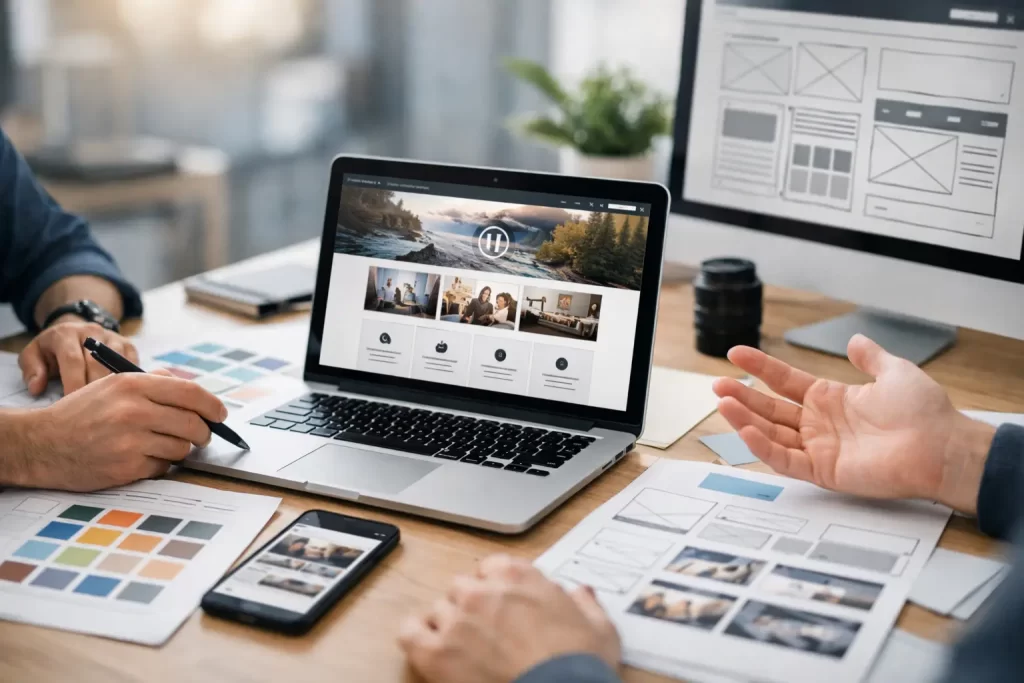
A business website usually starts showing its limits at the worst possible time – after the brand has matured, services have expanded, and marketing expectations are higher than the original site was built to support. That is where custom WordPress website design becomes a practical business decision rather than a cosmetic upgrade. For companies that need their website to reflect a professional brand, support search visibility, and adapt over time, custom work often solves problems that templates simply work around.
WordPress remains one of the most flexible website platforms available, which is one reason so many organizations use it. According to WordPress.org, the platform supports everything from straightforward brochure sites to complex content-driven websites. But flexibility alone does not guarantee a strong result. The difference comes from how the site is planned, designed, built, and maintained.
What custom WordPress website design really means
Custom WordPress website design does not just mean changing colors on a prebuilt theme. It means shaping the site around the business itself – its brand standards, content priorities, user needs, and operational goals. That can include a unique page structure, tailored design system, custom templates, specific calls to action, and content organization built for how customers actually move through the site.
For one business, that may mean a cleaner lead-generation path for service pages. For another, it may mean organizing a large library of resources, publications, locations, or programs in a way that is easier to manage internally. A professional services firm, manufacturer, nonprofit, restaurant group, or healthcare practice will not all need the same site structure, even if they share the same platform.
This is the core advantage of custom work. Instead of forcing the business into a layout someone else designed for a broad audience, the website is built to support specific goals.
Why templates often fall short
Template-based WordPress sites can be useful in the right situation. If a company needs a very small site quickly and has minimal content, a well-chosen theme may be enough. The trade-off is that themes are usually built to appeal to as many buyers as possible, which often leads to bloated code, unnecessary features, rigid layout constraints, or design patterns that feel generic.
Those limitations tend to surface in a few common ways. Branding can feel diluted because the site looks like many others using the same framework. Page layouts may not support the sales process well. Editors may struggle with clumsy backend controls. Performance can suffer when a theme loads scripts and design elements the site does not actually need.
There is also the issue of growth. A site that works for a five-page launch may become frustrating when the business adds new services, landing pages, blog content, hiring pages, event promotion, or resource libraries. Redesigning around those needs later is often more expensive than planning for them from the start.
Custom design supports more than appearance
A strong custom website should look polished, but appearance is only one part of the job. Good design helps users understand who the business is, what it offers, and what to do next. It also supports credibility. When visitors see a site that feels cohesive, clear, and professionally structured, they are more likely to trust the organization behind it.
That trust is built through many small decisions. Navigation has to make sense. Calls to action need to appear at the right moments. Content hierarchy should guide readers without overwhelming them. Mobile behavior needs to be considered from the beginning, not patched in later. Forms should be straightforward. Images, typography, spacing, and page flow all contribute to whether the site feels established or improvised.
This is also where branding and web design intersect. A website should not feel disconnected from the rest of a company’s marketing. The visual identity, messaging, printed materials, digital campaigns, and online presence should work together. Businesses often get better long-term results when website planning is tied to broader brand strategy rather than treated as a stand-alone project.
Custom WordPress website design and SEO
Search performance is another reason businesses move beyond templates. Custom WordPress website design can create a better foundation for SEO because it allows content structure, page hierarchy, metadata planning, internal navigation, and technical setup to align with actual search goals.
That does not mean custom design guarantees rankings. It does mean the site can be built with cleaner architecture and more deliberate content planning. Service pages can be organized around meaningful topics. Page templates can support stronger content. Navigation can reinforce important sections. Technical basics such as indexing controls, heading structure, mobile usability, and page experience can be handled more intentionally.
Google’s Search Central documentation makes clear that search visibility depends on useful content, crawlable structure, and a site that serves users well. A custom build gives businesses more control over those elements than a one-size-fits-all theme usually allows.
It also supports marketing beyond organic search. A better website structure helps paid campaigns land on stronger pages. Email traffic converts more effectively when landing pages are tailored to campaign goals. Social content performs better when it points to pages that match visitor expectations.
The operational side matters too
One of the most overlooked benefits of a custom WordPress site is internal usability. Business owners and marketing teams do not just need a site that looks good to visitors. They need a site they can realistically manage.
That may mean page templates that keep content consistent without being restrictive. It may mean easier editing for staff, better media organization, reusable content blocks, or a more sensible blog and resource workflow. If the backend is cluttered or fragile, even small updates become frustrating, and the site starts falling behind.
This is where experienced planning makes a difference. A custom site should account for who will maintain it, how often content changes, and what level of support the client wants after launch. For many organizations, ongoing website maintenance is not optional. Plugin updates, security monitoring, backups, testing, and content adjustments all affect how reliable the site remains over time.
When custom is worth the investment
Not every organization needs a fully custom build. A smaller business with a narrow service offering and limited marketing activity may be well served by a lighter approach. But custom work is often worth it when the website has to do more than exist.
If the site plays a central role in lead generation, recruiting, public communication, stakeholder trust, or content marketing, the return tends to be easier to justify. The same is true for organizations with established branding, multiple audiences, complex services, or long-term growth plans. In those cases, a generic structure can create limitations that cost more over time through missed opportunities, patchwork fixes, and inconsistent brand presentation.
Accessibility is another important factor. A custom approach allows design and development decisions to better support readability, keyboard use, color contrast, form labeling, and clearer page structure. The Web Content Accessibility Guidelines are a useful reference point for building a site that works for a wider range of users.
What to expect from a professional process
The best custom website projects usually begin with questions, not design mockups. A thoughtful process looks at business goals, audience needs, brand position, content requirements, functionality, and long-term maintenance before visual design begins.
From there, strategy should guide sitemap planning, content direction, wireframes, design concepts, and development priorities. Testing matters. Mobile review matters. Content entry matters. Launch should not be treated as the finish line, because websites rarely stay effective without continued refinement.
For businesses that also need support with branding, content planning, SEO, print materials, or campaign creative, it helps to work with a partner who understands how those efforts connect. A website performs better when it is part of a coordinated marketing system rather than a disconnected deliverable. That is often where an experienced agency can provide more value than a pieced-together approach handled by multiple vendors.
Toucan Design works with organizations that need that broader perspective – combining website design, WordPress development, branding, SEO, print, and ongoing creative support in a way that reflects real business needs rather than a narrow production checklist.
A custom WordPress site should make your business easier to understand, easier to trust, and easier to choose. If it also makes your team’s work simpler behind the scenes, it is doing what good design is supposed to do.