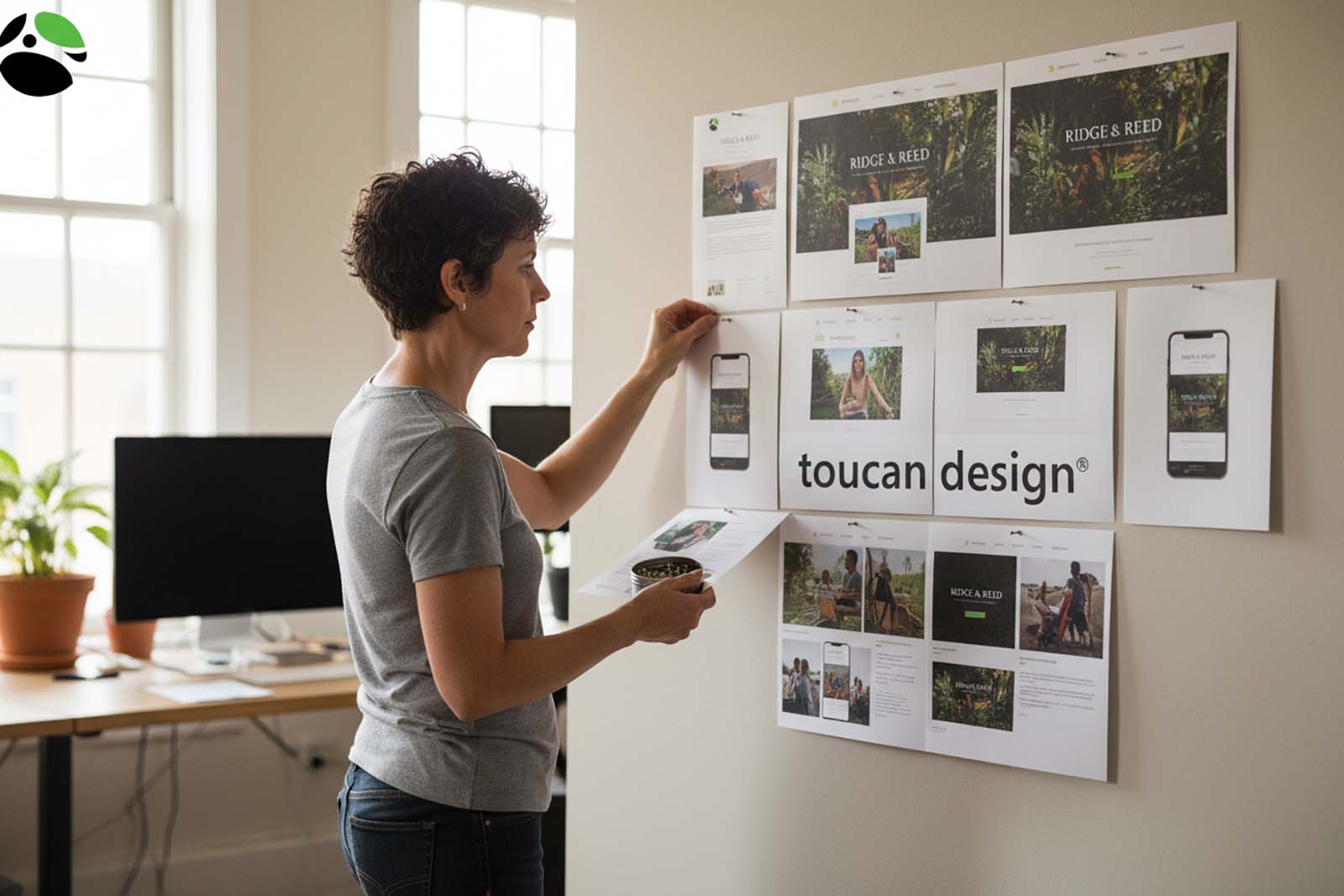
A prospect has agreed to meet, but that does not mean they are ready to buy. They are weighing risk, comparing options, and trying to explain your value to other decision-makers once the meeting ends. Knowing how to design a sales kit means giving them the right materials to understand, remember, and confidently share your case.
A sales kit is not simply a folder filled with brochures. It is a coordinated set of print and digital materials that supports a specific sales conversation. When the message, visuals, and proof points work together, the kit helps your team present a consistent story while making the next step easier for the buyer.
Start With the Sales Conversation
The best sales kits are built around the buyer’s questions, not the company’s inventory of marketing materials. Before choosing paper stocks, formats, or presentation templates, define where the kit will be used. A kit for a first meeting has a different job than one sent after a proposal review or left behind at a trade show.
Begin with three practical questions: Who will receive it? What decision are they trying to make? What should they do after reviewing it? A manufacturer may need to reassure purchasing teams about capacity and quality control. A healthcare or professional service organization may need to establish credibility, explain a process, and make complex services easier to understand. A restaurant group may need materials that help event planners compare catering options quickly.
This step also prevents a common mistake: trying to say everything at once. If a sales representative must explain every service, history point, and capability in one meeting, the prospect may leave with plenty of information but little clarity. A focused kit should guide the conversation from need to solution to next step.
Build the Core of a Sales Kit
What belongs in a sales kit depends on the length of the sales cycle, the service being sold, and the number of people involved in approval. Still, most effective kits include a few essential pieces that can be tailored to the opportunity.
A clear company overview
A concise overview establishes who you are, what you do, and the type of clients or projects you serve. It should be written in plain language and designed for fast scanning. Avoid turning this piece into a full corporate history. A prospect usually needs enough context to see why your organization is qualified, not a timeline of every milestone.
Service or product information
Use focused sell sheets, service sheets, or a capabilities brochure to explain the offerings most relevant to the buyer. Good sales materials describe outcomes as well as features. For example, instead of only listing a maintenance program’s included tasks, explain how it supports reliable operations, predictable planning, or reduced administrative burden.
Separate sheets are often more useful than one oversized brochure. They let a salesperson customize the kit without handing every prospect pages that do not apply to their needs.
Credibility and proof
Buyers need evidence. Case studies, short testimonials, project examples, certifications, process summaries, and relevant client results can reduce uncertainty. The strongest proof is specific. A statement such as “responsive service” is less persuasive than a brief example showing how your team handled a tight production schedule, complex rollout, or multi-location project.
Use only claims that can be supported. A well-designed case study does not need exaggerated language. It should show the challenge, the work completed, and the practical benefit to the client.
A next-step piece
Every kit should make the next action obvious. Depending on the sale, this may be a consultation request, project checklist, estimate process, sample request, meeting follow-up, or contact card. If your prospects frequently need internal approval, consider including a one-page decision summary they can pass to a manager or committee.
Create a Message System Before Designing
A polished sales kit can still fall short if each piece uses different language or priorities. Establish a simple message system before design begins. It should identify your primary value proposition, the two or three supporting reasons to choose your organization, and the proof behind each point.
For example, a business that provides commercial services may lead with dependable execution, then support it with experienced staff, documented processes, and a portfolio of comparable work. A technology-adjacent service firm might lead with clarity and ongoing support rather than technical specifications alone. The right emphasis depends on what your buyers care about most.
This messaging should appear consistently in the presentation, leave-behind materials, proposal cover, email follow-up, and sales landing pages. Repetition is not redundancy when it helps a prospect recognize the same promise across multiple touchpoints.
Design for Use, Not Just Appearance
Professional design adds credibility, but a sales kit must also be easy to use in a real conversation. A beautiful folder that is awkward to carry, a brochure with tiny type, or a presentation overloaded with dense slides can work against the sales team.
Use a clear visual hierarchy so readers can find the most important information quickly. Headlines should communicate meaning without requiring the body copy. Photography, charts, icons, and diagrams should clarify the message rather than fill space. White space is useful because it gives key points room to register.
Brand consistency matters here. Your logo, colors, typography, imagery, and voice should feel like the same organization a prospect saw on your website or in an advertisement. When materials look disconnected, buyers may question whether the business is organized behind the scenes. A consistent visual identity helps create confidence before the detailed discussion begins.
Print choices should reflect the role of the kit. A premium folder and substantial paper stock may be appropriate for high-value professional services or institutional presentations. For a fast-moving sales environment, a lighter, more economical format may make better sense. There is no universal answer. The format should support the value of the sale, the expected volume, and how often materials need updating.
Include Digital Materials Without Replacing the Human Conversation
Most sales kits now need a digital counterpart. A representative may present from a screen, send a follow-up PDF, or direct a prospect to a page with project examples and supporting information. Digital assets are especially useful when several stakeholders need to review the materials after a meeting.
Keep the digital version organized and easy to share. Name files clearly, use a consistent cover treatment, and make sure contact information is current. Large files can be frustrating for recipients, while poorly formatted PDFs can make an otherwise professional organization look careless.
A digital kit should complement the conversation, not force the buyer to sort through a document library alone. When appropriate, prepare a core version that can be customized with relevant services, examples, and a short note for each opportunity.
Give Your Sales Team a Practical Tool
Even the best materials need a plan for use. Sales representatives should know which pieces are intended for discovery meetings, proposals, follow-ups, and events. They should also understand the message behind each item and how to tailor it without making unsupported promises.
Consider creating a short internal guide that explains the recommended sequence. For instance, begin with the buyer’s challenge, introduce the relevant capability, show a comparable example, then leave behind only the materials that reinforce that discussion. This keeps the kit from becoming a stack of generic collateral.
Review the kit with the people who use it most. Sales staff often identify practical issues that are easy to miss in a conference room, such as missing comparison information, outdated service descriptions, or a need for a simpler one-page handout. Their feedback can improve both the content and the format.
Keep the Kit Current
A sales kit is a working business tool, not a one-time design project. Review it at least annually and whenever your services, positioning, leadership, contact information, or portfolio changes. Outdated examples and expired credentials can undermine trust quickly.
Build materials in a way that allows individual components to be refreshed without reprinting everything. Modular sell sheets, editable presentation templates, and digital versions make updates more manageable. This approach also gives your team flexibility when a prospect needs a more specialized package.
Toucan Design helps organizations bring branding, print collateral, presentations, websites, and marketing materials into one clear system. The goal is not to create more pieces for the sake of it. It is to create the right pieces for the conversations that move business forward.
A sales kit earns its place when it helps a prospect explain your value after you have left the room. Give them a clear story, credible evidence, and a simple next step, and your materials will continue doing useful work long after the meeting ends.