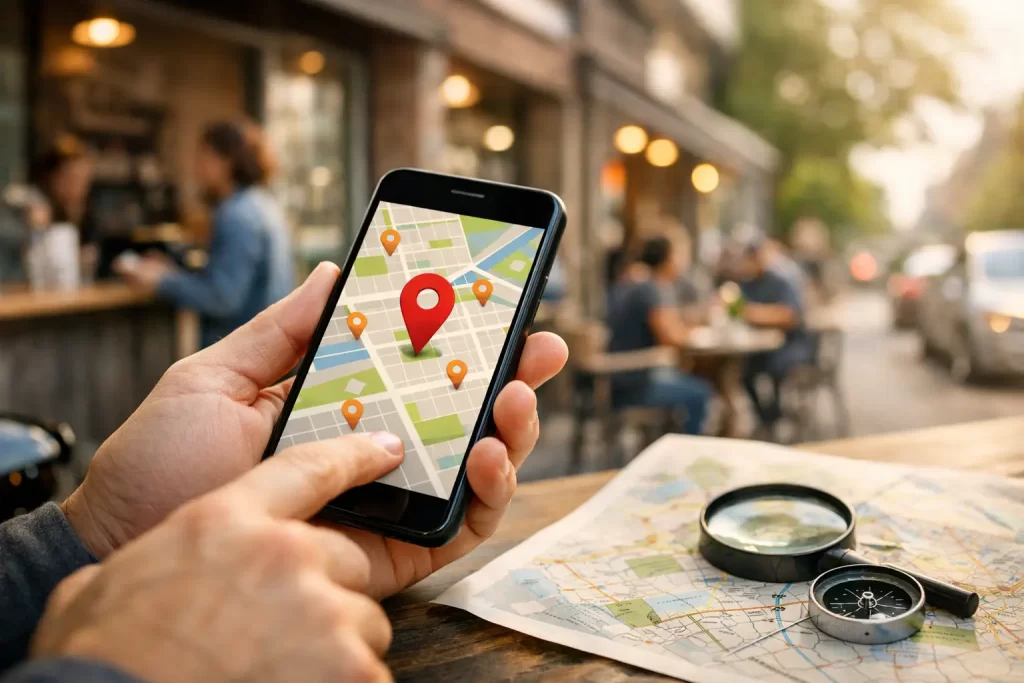
A customer searching for a dentist, restaurant, contractor, consultant, or local supplier is usually trying to make a decision quickly. They want to know who serves their area, whether the business appears credible, how to get in touch, and what other customers have experienced. Local SEO helps make those answers easy to find at the moment they matter.
For businesses with a physical location, a service area, or a regional customer base, local visibility is not a side project. It is part of how a professional brand earns trust before the first phone call, form submission, or visit. The strongest results come from aligning your business listings, website content, reviews, visual identity, and customer experience rather than treating each as a separate task.
What Local SEO Actually Does
Local SEO is the work of improving how a business appears when people search for nearby products and services. Those searches may include a city or neighborhood name, such as “commercial printer in Denver,” but they may also be broader searches made from a mobile phone, such as “emergency plumber near me.”
Search engines use several signals to decide which businesses to show. Relevance matters: does your website and listing clearly explain what you do? Distance can matter: is the searcher near your office, store, or service area? Prominence also plays a role: does the business have a credible web presence, consistent information, useful reviews, and evidence that it is established?
No single tactic controls those results. A polished website cannot fully compensate for an incomplete business profile, and a well-maintained profile cannot replace a website that is vague, outdated, or difficult to use. The goal is to give customers and search engines a consistent, accurate picture of your business.
Start With an Accurate Google Business Profile
For many local searches, a Google Business Profile is the first place a prospective customer encounters a company. It can display business hours, phone number, address, service categories, reviews, photos, directions, and recent updates. That makes accuracy essential.
Set up or claim the profile using the real business name used on your signage, website, and customer materials. Choose categories that describe your core services rather than trying to cover every possible offering. A healthcare practice, for example, should lead with its primary specialty. A design and marketing agency should use categories that reflect the services it genuinely provides.
Your hours, phone number, website address, and physical address should be maintained carefully. If you serve customers at their locations and do not receive visitors at an office, use the appropriate service-area settings rather than publishing a misleading address. Businesses with multiple offices should create a distinct, properly managed profile for each legitimate location.
Photos are also part of the decision process. Professional images of your storefront, team, work environment, products, vehicles, or completed projects can reinforce that the business is real, active, and prepared to serve customers. They do not need to feel staged, but they should reflect the quality clients can expect.
Make Your Website Support Local Search Intent
A business profile may introduce your company, but your website should provide the depth needed to build confidence. When visitors arrive, they should quickly understand what you offer, who you serve, where you work, and how to take the next step.
Start with clear service pages. Each important service deserves content that explains the work in practical terms, identifies the types of clients it helps, and answers the questions prospects commonly ask. For example, a manufacturer may need a page about custom fabrication, while a professional services firm may need separate pages for consulting, training, and ongoing support. Broad, catch-all pages often leave both visitors and search engines uncertain about the business’s focus.
Location information should be used where it is genuinely helpful. A company with offices in several cities may need a dedicated page for each office, including local contact details, the services available there, and relevant proof of experience. A service-area business may be better served by describing its actual coverage areas naturally within core service pages and a service-area page.
Avoid creating thin pages that simply swap one city name for another. Those pages rarely help customers and can make a website look manufactured rather than useful. A worthwhile location page contains information unique to that market, office, team, project history, or customer need.
Your contact information should be easy to find and consistent across the site. Include the business name, address when applicable, local phone number, hours, and clear contact options. This information belongs in logical places such as the contact page, footer, and relevant location pages. A strong website also needs to work well on mobile devices, where many local searches begin.
Consistency Builds Trust Across the Web
A business may appear on maps, industry associations, chambers of commerce, social platforms, supplier sites, and local publications. The details across those places should agree. Small discrepancies in a suite number, abbreviated business name, phone number, or old web address can create confusion for both customers and search platforms.
This does not mean every mention of your business must use identical punctuation. It means the core facts should be reliable. If you move, change phone systems, update your business name, or open a new location, audit the places where customers may find you. Updating your own website and business profile is the priority, but established third-party listings should be corrected as well.
Brand consistency matters here, too. A recognizable logo, professional photography, clear messaging, and coordinated printed materials make a business easier to remember when customers see it in several places. Local visibility is stronger when the experience feels connected from a search result to a website, an appointment card, a storefront sign, or a sales presentation.
Reviews Need a Process, Not a One-Time Push
Reviews are one of the clearest forms of local proof. They can influence whether someone calls, requests a quote, visits a location, or keeps searching. The best approach is simple: ask satisfied customers for an honest review after a completed project, purchase, appointment, or successful service interaction.
Timing matters. A request sent while the experience is still fresh is more likely to receive a response than a generic request sent months later. Make the process easy for your team and customers, but do not pressure people, offer incentives for positive feedback, or use review practices that distort real experiences.
Responding to reviews is equally valuable. A brief, professional thank-you shows that your business pays attention. When a customer raises a concern, respond calmly, protect private information, and focus on a reasonable next step. A thoughtful response to a difficult review can say more about a company’s standards than a page of promotional copy.
Content Can Show Local Expertise Without Becoming Repetitive
Useful content gives businesses another way to answer local questions before a prospect reaches out. The right topics depend on your industry. A restaurant might share seasonal menus and event information. A contractor could explain permit considerations or material choices common in its service area. A nonprofit may publish program updates, community impact stories, and event details.
The key is to create content because it helps a real audience, not because a city name needs to appear more often. Write about the work you do, the questions customers bring to you, and the factors that shape a successful project. Add accurate local context when it improves the answer.
For organizations serving customers nationwide, local SEO can still be useful. The strategy simply changes. A national brand may optimize individual office locations, support regional representatives, or build pages around markets where it has an established presence. It should not pretend to be local everywhere. Clear service areas and honest positioning are more valuable than inflated coverage claims.
Measure the Actions That Lead to Business
Rankings are useful indicators, but they are not the only measure worth watching. Look at calls, direction requests, contact form submissions, appointment bookings, quote requests, and visits to key service or location pages. These actions show whether local traffic is producing genuine opportunities.
Review performance regularly, especially after a website redesign, business move, change in hours, or expansion into a new market. Search visibility can shift because of competitors, customer behavior, platform updates, seasonality, or changes to your own information. A practical local SEO plan leaves room for maintenance and refinement.
For many businesses, the work also overlaps with broader marketing. Strong branding helps people recognize your name. A well-designed website makes information easier to trust. Print pieces can support in-person experiences, while social media and advertising can reinforce timely campaigns. Toucan Design approaches these elements as connected parts of a professional business presence, not isolated marketing tasks.
Local search is ultimately a trust test conducted quickly. Give people accurate information, a clear reason to choose your business, and a straightforward path to contact you. When those basics are handled well and kept current, your local presence has a far better chance of supporting the relationships you want to build.