A business can have a well-designed website, polished brochures, and active social media accounts and still feel unclear to the people it wants to reach. That usually happens when the company has not defined what is branding and logo design in a practical, business-minded way. These two terms are often grouped together, but they are not the same thing, and understanding the difference can shape how customers perceive your company from the first impression onward.
Branding is the bigger picture. Logo design is one part of that picture. When they work together, a business looks more credible, communicates more clearly, and becomes easier to recognize across every customer touchpoint.
What Is Branding and Logo Design in Simple Terms?
Branding is the system that defines how a business presents itself and how it wants to be understood. It includes positioning, messaging, tone of voice, visual style, customer perception, and the overall experience people have with the company. It answers questions like: Who are we? What do we stand for? Why should customers trust us? How should we look and sound?
Logo design is the creation of the visual mark that represents the business. That may be a wordmark, symbol, monogram, or combination mark. A logo helps people identify the company quickly, but it cannot carry the entire burden of branding by itself.
That distinction matters. Many businesses assume a new logo will fix deeper communication problems. Sometimes it helps, but only when the logo is part of a broader brand system. If the messaging is inconsistent, the website feels disconnected, and printed materials look unrelated, a logo refresh alone will not solve the issue.
Branding Is the Strategy Behind the Look
A strong brand starts with clarity, not decoration. Before colors, fonts, or layouts are chosen, a business needs to understand its audience, market position, and goals. A law firm, a local restaurant, a healthcare provider, and a manufacturing company may all need professional branding, but the strategy behind each one will be different.
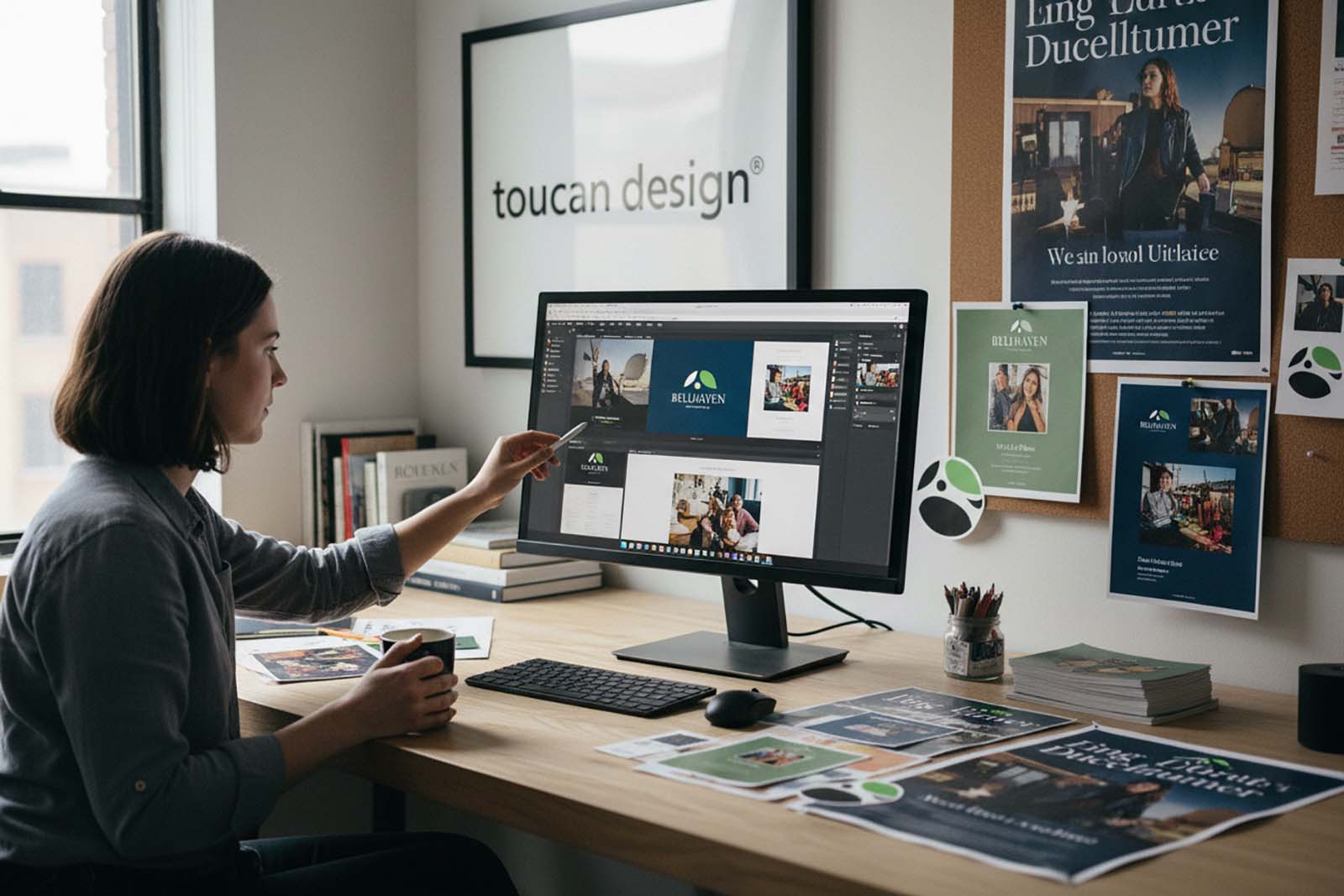
Branding typically includes the company name, voice, messaging, visual direction, audience alignment, and standards for how the business should appear across different platforms. It shapes how the website is written, how sales materials are designed, how signage looks, how social graphics are styled, and even how consistently employees present the business.
This is why branding has long-term value. It creates continuity. When a customer sees your website, business card, brochure, proposal, digital ad, or trade show display, those pieces should feel like they belong to the same company. That consistency builds trust.
For small and mid-sized businesses, branding also improves decision-making. Instead of reinventing the look and message for every new campaign or marketing piece, the company works from a clear foundation. That saves time, reduces confusion, and produces stronger creative work over time.
Logo Design Is the Visual Signature
If branding is the system, the logo is the signature. It is often the first visual element people notice, which is why it needs to be clear, appropriate, and professionally developed.
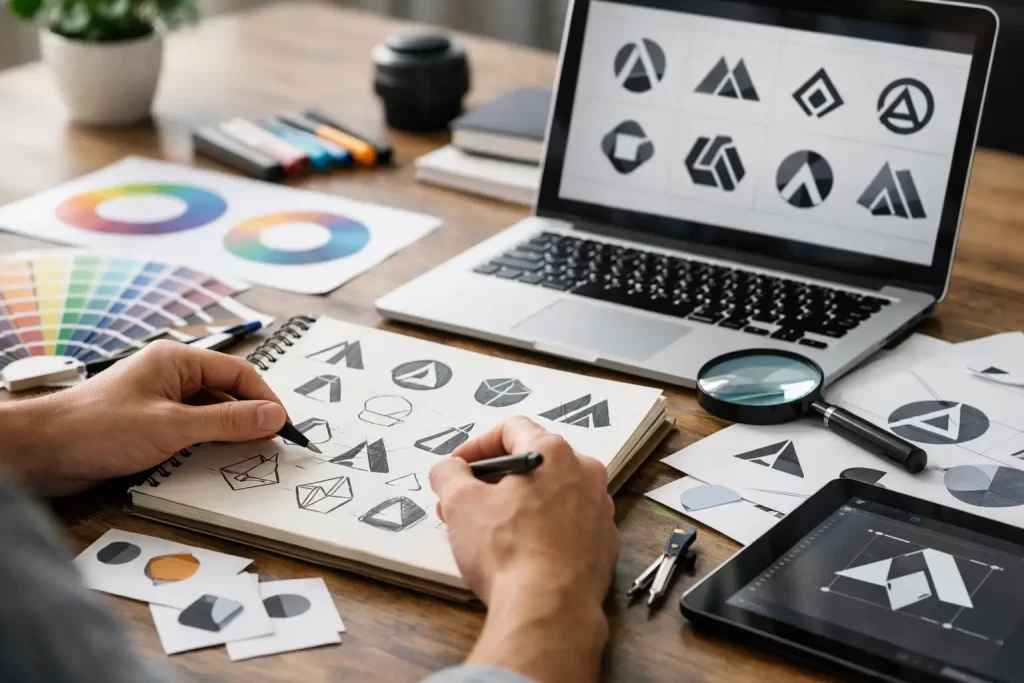
A good logo is not simply attractive. It should fit the business, work across multiple formats, and remain recognizable whether it appears on a website header, storefront sign, embroidered shirt, social profile, presentation slide, or printed folder. Simplicity usually helps, but simple does not mean generic.
The best logos are shaped by context. A logo for a children’s activity center can be more playful than one for a financial advisory firm. A hospitality brand may need warmth and personality, while a government-related organization may need authority and clarity. In each case, design choices should reflect the audience and purpose.
There are trade-offs here. Highly detailed logos may look impressive in large format but fail at small sizes. Trend-driven styles can feel current for a short time but date quickly. Overly abstract marks may look distinctive yet communicate very little without strong brand support. Practical logo design weighs all of those factors before finalizing a direction.
Why Businesses Often Confuse the Two
It is easy to see why branding and logo design get blended together. The logo is the most visible symbol of the brand, and in many cases it becomes shorthand for the whole identity. But that can create unrealistic expectations.
A logo cannot define your customer service approach, explain your value proposition, clarify your market position, or create consistency across your website, print materials, advertising, and digital content. Those are branding functions.
At the same time, a strong brand still needs a strong logo. Without one, the company may struggle with recognition and visual consistency. The relationship is not either-or. Branding gives meaning to the logo, and the logo gives the brand a memorable visual anchor.
What Strong Branding and Logo Design Actually Do
When handled well, branding and logo design make a business easier to trust. They help customers understand what the company offers, who it serves, and what kind of experience they can expect. That matters in competitive markets where buyers are comparing several providers at once.
Strong branding also supports professional consistency. A company with established visual standards and messaging guidelines is far less likely to send out mismatched marketing materials or a website that feels disconnected from its printed collateral. That consistency can be especially valuable for organizations with multiple departments, service lines, or locations.
From a sales and marketing perspective, branding improves recall. People are more likely to remember a business when its visual identity and messaging are cohesive. According to the Nielsen Norman Group, users form impressions of digital experiences quickly, and visual clarity plays a direct role in perceived credibility. That applies well beyond websites.
There is also an internal benefit. Businesses with clear branding often find it easier to brief designers, writers, developers, and marketing teams because the standards are already defined. Projects move faster when everyone is working from the same foundation.
What Is Included in a Brand Identity?
When clients ask what is branding and logo design, they are often really asking what they need to create a professional, usable identity. In most cases, that goes beyond a single logo file.
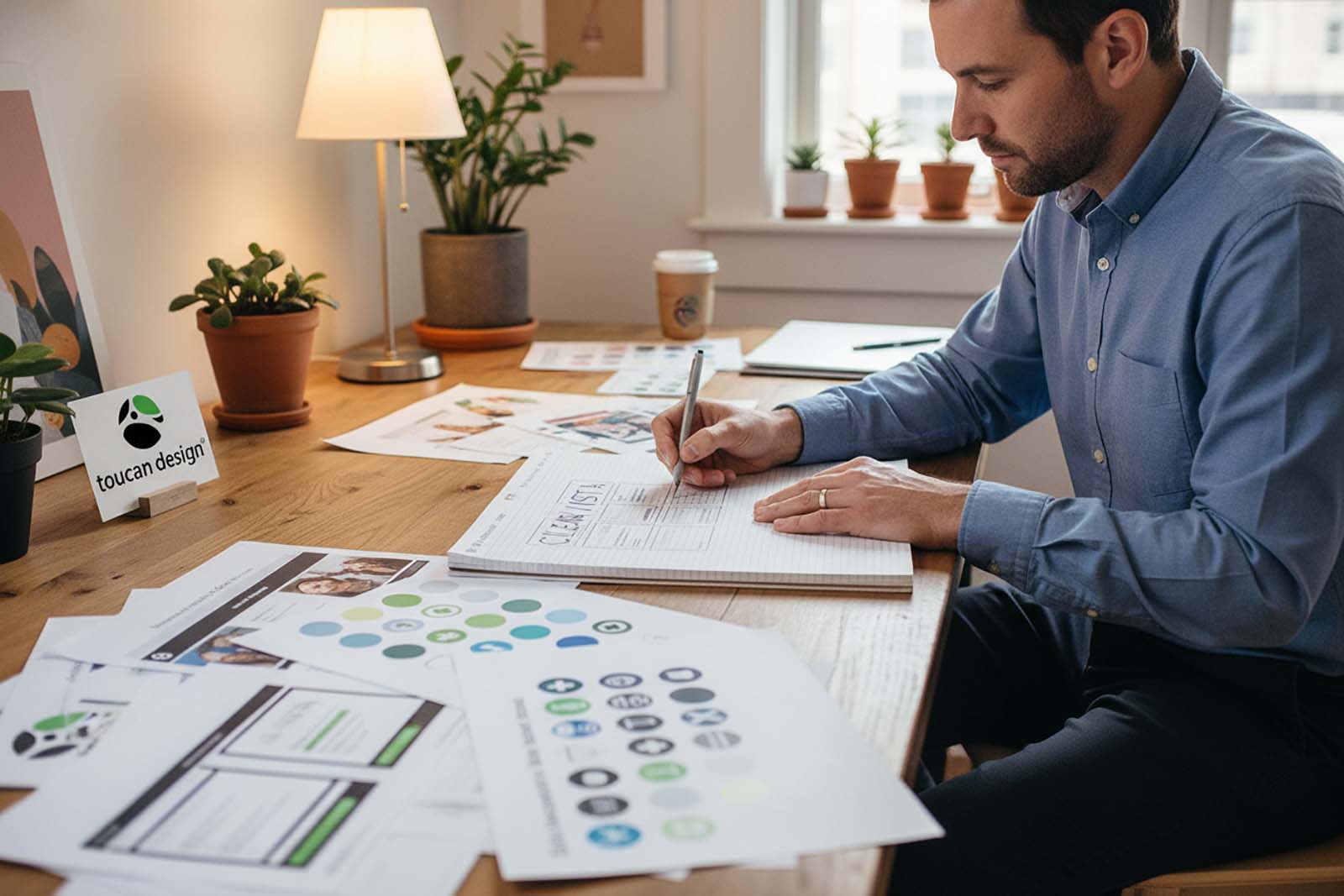
A practical brand identity may include a primary logo, secondary logo variations, color palette, typography, graphic elements, image style, brand voice guidance, and standards for how all of those pieces should be used. Depending on the business, it may also extend into stationery, signage, website design, social media graphics, digital ads, brochures, presentation templates, packaging, or uniforms.
This is where businesses benefit from thinking in systems rather than isolated deliverables. If your logo looks polished but your website feels dated, or your sales sheet uses different fonts and colors than your digital ads, the brand loses strength. Customers may not identify the problem directly, but they notice the inconsistency.
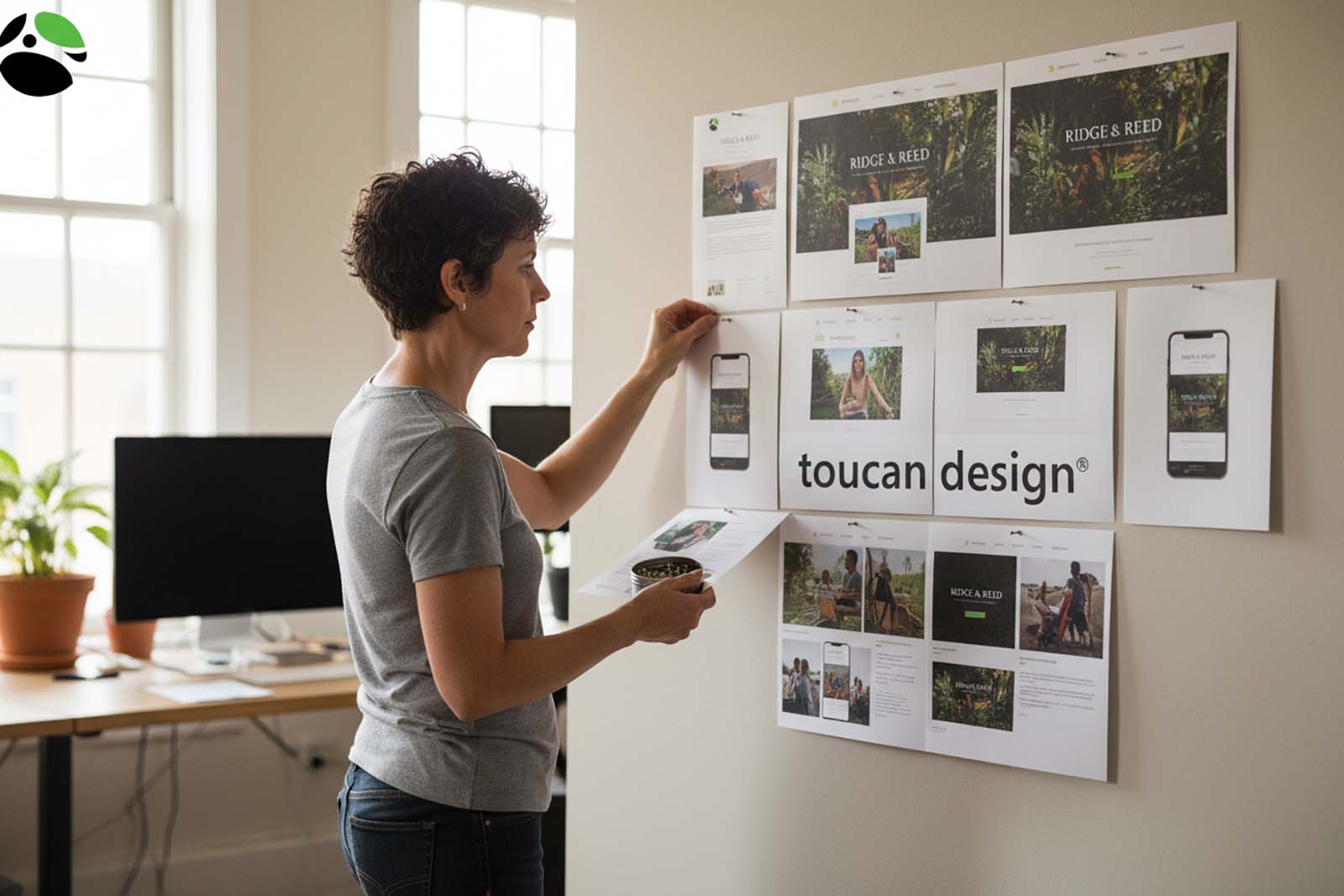
That is why branding often works best when it is connected to the full range of communication tools a business uses. A well-built identity should carry through web design, print, SEO content, social assets, and advertising so the business feels cohesive everywhere it appears.
When a Business Needs Branding, Logo Design, or Both
It depends on the situation. A startup typically needs both because it is building from scratch. An established company may already have name recognition but need a brand refresh because its current identity feels outdated or inconsistent. Another business may only need logo refinement if the broader brand system is already solid.
There are common signs that a company needs more than a logo update. Marketing materials may look disconnected from one another. The website may not reflect the quality of the business. Different departments may be using different colors, fonts, or messages. The company may have grown into new services or markets and no longer look aligned with where it is headed.
In those cases, branding work can bring structure to the entire system. A logo redesign may be part of that process, but it should support a larger goal rather than act as a cosmetic fix.
For businesses that need reliable, long-term creative support across web, print, branding, and marketing, this is often where an experienced agency partner becomes especially valuable. Firms like Toucan Design help connect those pieces so the brand is not only attractive, but functional across the channels that drive real business growth.
Choosing an Approach That Fits Your Business
Not every company needs an elaborate branding process. Some need a focused visual identity and clear standards they can use immediately. Others need deeper strategy because they are repositioning, merging, expanding, or correcting years of inconsistency.
The right approach depends on your audience, goals, budget, and the number of places your brand needs to appear. A local service business may need a clean logo, website alignment, vehicle graphics, and printed leave-behinds. A regional organization may need a more developed identity system that supports multiple campaigns and stakeholders. A professional services firm may need branding that communicates authority and clarity without looking generic.
What matters most is that the work is grounded in how the business actually operates. Good branding should not create a polished front that the company cannot support. It should present the business accurately, professionally, and consistently.
If you are asking what is branding and logo design, the most useful answer is this: branding defines the business, and logo design gives that definition a visible form. When both are handled thoughtfully, your company becomes easier to recognize, easier to understand, and easier to trust. That is a better foundation than a new logo alone, and it tends to pay off across every place your business shows up.